
In modern industrial cooling, choosing between an Open FRP (Fiberglass Reinforced Plastic) Cooling Tower and a Closed Circuit Cooling Tower (Indirect Cooling) is a critical decision that impacts long-term operational costs and system reliability. As a leading manufacturer, Yaotong Water provides this technical breakdown to help you make an informed choice.
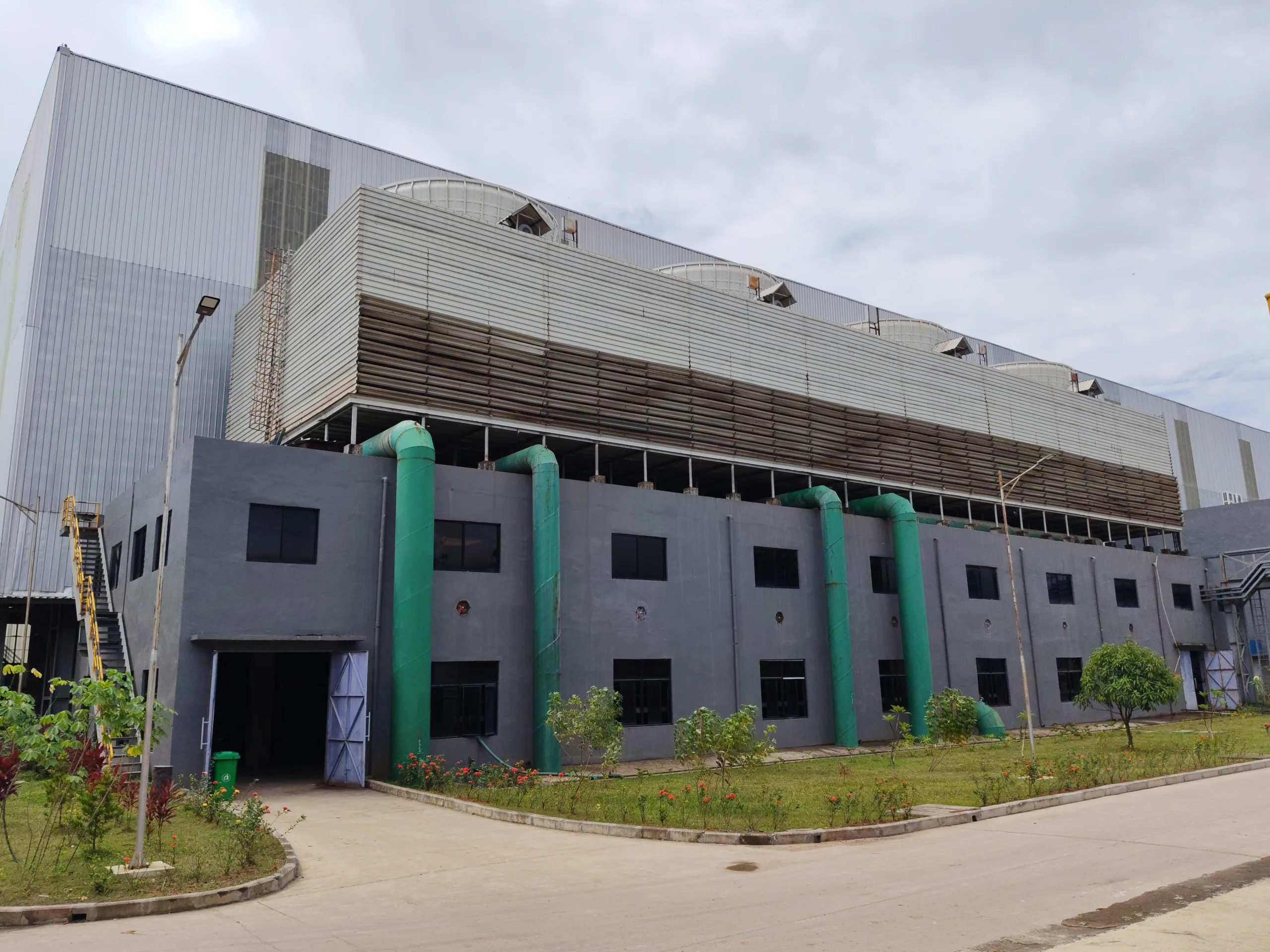
1. Open FRP Cooling Tower — The Cost-Effective Solution for Large-Scale Cooling
An open cooling tower rejects heat by splashing process water directly over a fill media, where it comes into contact with ambient air.
- How It Works: The hot water is distributed over the internal fill. As air moves through the fill, a small portion of the water evaporates, cooling the remaining bulk water which is then recirculated.
- Best For:
- Standard HVAC Systems: Cooling for shopping malls, office buildings, and hotels.
- Low-Precision Industry: Applications where process fluid can tolerate minor contamination (e.g., small air compressors, simple hydraulic presses).
- High Flow Requirements: Projects requiring massive cooling capacities with a focus on minimizing initial capital expenditure (CAPEX).
- Key Advantages:
- Low Initial Investment: Simpler structure and faster installation.
- Corrosion Resistance: The FRP casing is naturally immune to rust and harsh weather, ensuring a long structural lifespan.
- Limitations: The open design allows dust, biological growth, and scaling to accumulate, requiring consistent water treatment and makeup water.
2. Closed Circuit Cooling Tower — Maximum Protection for High-Precision Equipment
A closed-circuit tower (or fluid cooler) isolates the process fluid from the environment by circulating it through a heat exchanger coil.
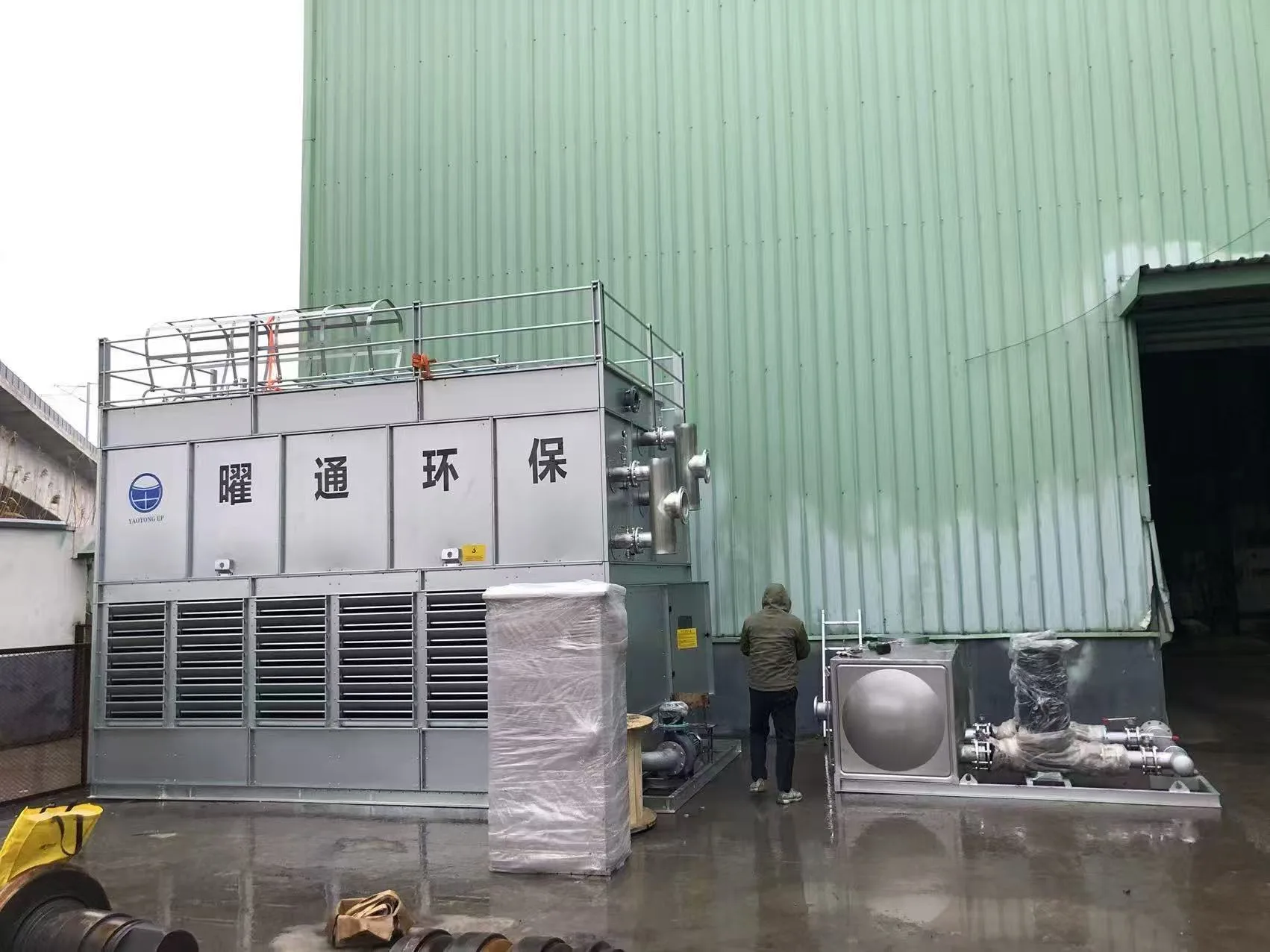
- How It Works: The process fluid (purified water, oil, or glycol) stays inside a sealed coil. A secondary spray system wets the outside of the coil, while fans pull air across it to facilitate heat transfer through the tube walls.
- Best For:
- Induction Heating & Melting: Medium-frequency furnaces and vacuum furnaces where internal scaling could lead to catastrophic coil burnout.
- Chemical Processing: Preventing cross-contamination or the leakage of expensive/hazardous process fluids.
- Data Centers: Demanding 24/7 uptime and high reliability with strict water conservation targets.
- Cold Climates: The closed loop can be filled with antifreeze, allowing safe operation in freezing temperatures without the risk of burst pipes.
- Key Advantages:
- Clean Loop Integrity: The internal fluid remains at “laboratory grade” purity, completely eliminating scale and clogs in the production machinery.
- Reduced Operational Costs: Minimal drift loss and significantly lower chemical treatment expenses.
- Limitations: Higher initial cost and a slightly larger footprint compared to open towers of the same capacity.
3. Technical Comparison at a Glance
| Feature | Open FRP Cooling Tower | Closed Circuit Cooling Tower |
|---|---|---|
| Fluid Quality | Open to air; prone to scale/fouling | Sealed & Pure; Zero contamination |
| Equipment Protection | Moderate (Requires periodic cleaning) | Excellent (Protects downstream assets) |
| Initial Investment | Low | High |
| Water Consumption | Higher (Evaporation + Drift + Blowdown) | Lower (Minimal loss) |
| Winter Operation | Requires drainage; high freeze risk | Safe (Antifreeze or Dry-run compatible) |
| Maintenance | Frequent cleaning of basin/fill | Minimal maintenance for internal loop |
4. Engineering Recommendations from Yaotong Water
- Choose an Open FRP Tower if your budget is the primary driver and your cooling load involves standard HVAC or industrial processes that are not sensitive to mineral scaling.
- Choose a Closed Circuit Tower if you are protecting high-value assets (e.g., lasers, electric furnaces, automated production lines). The long-term ROI in terms of reduced downtime and extended equipment life far outweighs the initial price premium.
As a premier manufacturer of both systems, Yaotong Water provides customized selection reports based on your local water quality, ambient conditions, and load profiles.